
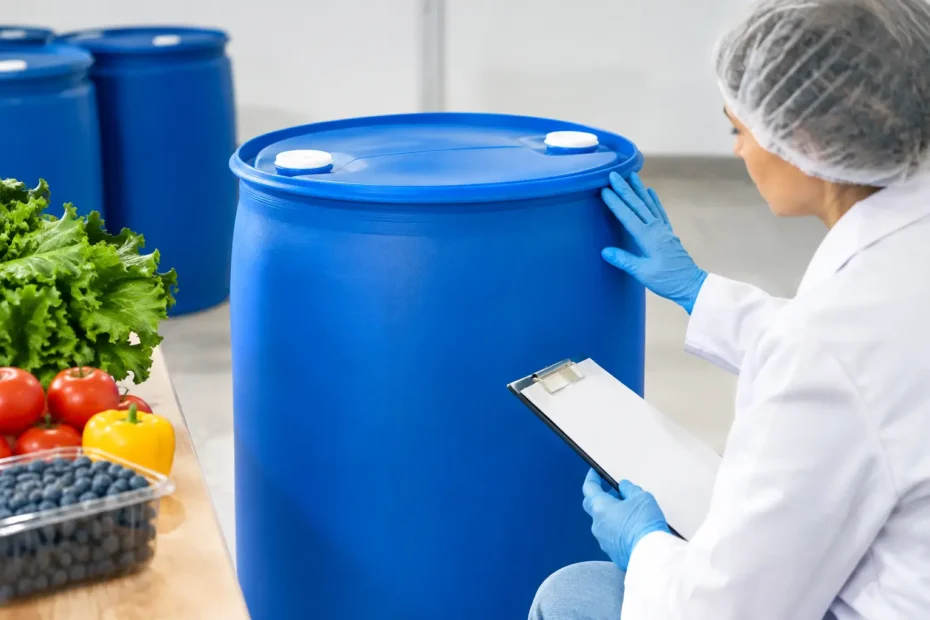
A drum can look clean, carry a food-grade symbol, and still be the wrong choice for edible products. When buyers ask, are HDPE drums food safe, the correct answer is: they can be, but only when the specific drum, its components, its prior use, and the intended product all meet food-contact requirements.
For food and beverage operations, the decision should not be based on plastic type alone. A suitable HDPE drum needs verified material compliance, controlled manufacturing, clean handling, and a closure system that protects the contents from contamination. This matters whether the drum will hold water, syrup, edible oil, ingredients, concentrates, or other food-processing materials.
Are HDPE Drums Food Safe by Default?
HDPE, or high-density polyethylene, is widely used for food packaging because it is strong, lightweight, moisture-resistant, and generally resistant to many chemicals. It does not rust like metal and performs well in demanding storage and transport environments. These qualities make HDPE a practical material for drums, jerry cans, bottles, pails, and containers.
However, HDPE is a material category, not a food-safety certificate. Not every HDPE drum is manufactured from food-contact-approved resin. A drum may also contain colorants, additives, recycled content, gaskets, caps, or fittings that are not appropriate for direct food contact. For this reason, a buyer should treat the words “HDPE drum” and “food-grade drum” as separate specifications.
A food-safe drum should be supplied as suitable for food contact under the relevant regulations for the market and application. For United States-oriented specifications, buyers often request confirmation of compliance with applicable FDA food-contact requirements. Depending on the supply chain and destination, other standards or local food-safety requirements may also apply. The key point is documentation: a supplier should be able to confirm the product specification rather than rely on a general statement that HDPE is safe.
What Makes an HDPE Drum Suitable for Food Use?
The safest purchasing approach is to review the complete container system. The drum body matters, but so do the lid, bung, cap, gasket, valve, liner, and tamper-evident seal where applicable.
Virgin Resin and Food-Contact Compliance
For direct food contact, new drums made from virgin, food-contact-approved HDPE are usually the preferred option. Virgin resin provides clearer traceability and reduces concerns about residual substances from previous materials. Recycled HDPE may be suitable for many industrial and non-food uses, but it should not be assumed suitable for food storage unless the supplier specifically verifies its approved food-contact status.
Ask for a declaration of compliance, technical data sheet, or written confirmation identifying the resin and intended application. This is particularly useful for procurement teams buying drums repeatedly or supplying food manufacturers that require documentation in their quality files.
New Drums Versus Used or Reconditioned Drums
A new food-grade HDPE drum is the most dependable choice for edible products. Used drums can retain residues, odors, microorganisms, or chemicals from prior contents, even when they appear clean. Reconditioned drums may be acceptable for certain non-food industrial uses, but they create unnecessary risk for food, beverage, and ingredient storage.
If a business is considering any reused container, it must have complete traceability of its prior contents and a validated cleaning process. In practice, most food operations avoid this uncertainty by purchasing new drums intended for food contact.
Closures, Gaskets, and Liners
A food-safe drum body can be compromised by the wrong closure components. Gaskets and seals should be compatible with both the product and the cleaning process. For example, edible oils, acidic concentrates, flavorings, and high-sugar liquids can each place different demands on seals and fittings.
The closure must also prevent dust, pests, moisture, and tampering during storage or delivery. Tight-fitting bungs, suitable caps, and tamper-evident options help protect product quality. If the contents are highly sensitive to odor or oxygen exposure, discuss whether an internal liner or specialized barrier container is required.
Match the Drum to the Product You Are Storing
Food safety and product compatibility are connected, but they are not identical. A drum may be approved for food contact while still being unsuitable for a particular product’s temperature, acidity, viscosity, or shelf-life requirement.
Water, dry ingredients, and many low-risk food materials may work well in a standard food-contact HDPE drum. Products containing strong flavors, essential oils, high acidity, alcohol, or aggressive cleaning agents used in processing may require additional compatibility review. Hot-fill applications also need special attention because heat can affect HDPE performance, drum shape, and closure integrity.
Before placing a bulk order, provide the supplier with the product type, fill temperature, expected storage period, fill volume, and whether the drum will be stacked or transported. These details help determine the appropriate capacity, wall thickness, opening style, and closure arrangement.
Do Not Rely on Color, Symbols, or UN Marks Alone
A recycling mark with the number 2 identifies HDPE, but it does not prove food-contact approval. Similarly, a white or natural-color drum is not automatically food grade, and a blue drum is not automatically unsuitable. Color can be part of a customer’s hygiene or product-identification system, but it is not a compliance document.
UN-rated drums deserve the same careful review. A UN mark indicates that a packaging unit has been tested for transporting certain regulated goods under specified conditions. It does not automatically mean the drum is suitable for food contact. A drum can be UN-rated, food-contact compliant, both, or neither, depending on its exact design and certification.
Practical Checks Before Ordering Food-Grade HDPE Drums
For a recurring supply program, create a simple approval process before the first purchase. Confirm whether the drum is new and made from food-contact-approved material, then review the technical documentation and intended use. Verify the capacity, opening size, bung or lid type, gasket material, and whether the product requires tamper evidence or a liner.
It is also wise to inspect sample drums before full delivery. Check the interior for cleanliness, odor, visible particles, cracks, sharp edges, or deformation. Confirm that caps and seals fit properly and that the drum can be handled safely with your filling, lifting, palletizing, and warehouse equipment.
For operations with formal quality systems, retain supplier documentation alongside receiving records. Record the product code, batch or lot details where available, delivery date, and inspection outcome. This creates better traceability if a customer, auditor, or internal quality team later requests evidence of packaging suitability.
Storage and Handling Still Matter After Purchase
Even an approved HDPE drum needs correct storage. Keep empty food-contact drums covered and protected from dust, direct contamination, and excessive heat. Store them away from chemicals, fuels, solvents, pesticides, and strong-smelling products that could affect the packaging or create cross-contamination concerns.
During filling, use clean equipment and keep closures off the floor or other unclean surfaces. Once filled, seal each drum promptly and label it clearly with the contents, batch information, filling date, and handling instructions. Avoid dragging drums across rough floors, overstacking them, or exposing them to prolonged direct sunlight unless the specification confirms that the application allows it.
For commercial buyers in Doha, Wakra, and Lusail, dependable availability matters as much as the initial specification. Doha Plastic House supports buyers with practical product guidance, warehouse stock, pre-delivery quality checks, and direct coordination on container requirements. Providing the intended application at the quotation stage helps ensure the selected drum fits the job rather than simply matching a capacity requirement.
The right question is not only whether HDPE is food safe. It is whether this particular new drum, with its specific resin, closure, documentation, and handling process, is suitable for your food product from filling through final delivery.