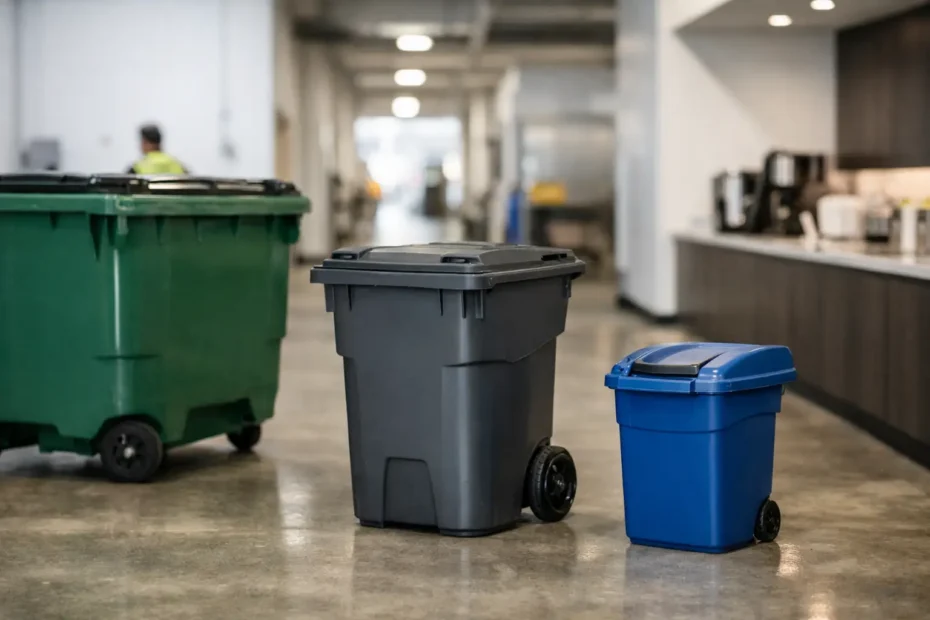
A waste bin that fills before the next collection creates odors, overflow, and extra cleaning work. A bin that is too large takes up valuable space, costs more to handle, and can encourage poor waste separation. Knowing how to size waste bins helps facilities teams, contractors, retailers, and hospitality operators maintain cleaner premises while controlling purchasing and collection costs.
The right capacity is not decided by floor area alone. It depends on the number of users, the type of waste produced, how often it is collected, and where the bin will be positioned. A practical sizing process gives your team enough capacity for normal use without creating an oversized, difficult-to-manage waste point.
Start With the Waste Stream
Before selecting a bin size, identify what will go inside it. General office waste is usually light and dry, such as paper cups, food packaging, tissues, and paper. A restaurant kitchen may produce heavier food waste, wet materials, and packaging. A warehouse may generate cardboard, plastic wrap, strapping, and damaged packing materials.
Waste type affects both the volume and weight of the bin. Light packaging can fill a large bin quickly without becoming heavy. Food waste may require a smaller bin emptied more often to control odor and hygiene. Construction or maintenance waste can be bulky, sharp, or heavy, making material strength and bin design as important as capacity.
Separate waste streams wherever possible. General waste, recyclable plastic, cardboard, food waste, and industrial waste should not automatically share one container. When each stream has an appropriate bin, staff can dispose of materials correctly and collection teams can work more efficiently.
Calculate Daily Waste Volume
The most reliable way to size waste bins is to observe actual waste output. For several working days, record how many bags or containers are filled in each area before collection. Note whether bins regularly overflow, stay mostly empty, or contain waste that should be separated into another stream.
If no previous data is available, begin with expected occupancy and activity. An office with employees present throughout the day has a different requirement from a retail shop with high customer traffic. A warehouse with a small staff may still need significant capacity if it receives frequent deliveries and produces large volumes of packing waste.
Consider these operating factors together:
- Number of employees, visitors, customers, or residents using the area
- Type of activity, including food service, packaging, cleaning, maintenance, or production
- Peak periods, such as lunch hours, busy retail days, events, or delivery schedules
- Waste collection frequency and whether collections occur on weekends or holidays
- Available space for indoor bins, outdoor bins, and central waste storage
A bin should normally have some spare capacity at the end of the collection cycle. Planning for only average waste output often leads to overflow during busy periods. A sensible allowance for peak days is usually more cost-effective than repeated emergency collections and additional cleaning labor.
Match Bin Capacity to Collection Frequency
Collection frequency is one of the main decisions in waste bin sizing. A smaller bin emptied daily may be better than a large bin emptied every few days, especially where food waste, wet waste, or strong odors are involved. In dry storage areas, larger bins can be practical if waste is clean and collection access is straightforward.
For example, a small office pantry may use a compact pedal bin that is emptied daily. A shared office floor may require several medium-sized bins near work areas and one larger central bin for bagged waste. A hotel back-of-house area may need larger wheeled bins, but food waste should still be collected frequently rather than stored until the container is full.
Outdoor waste points need additional consideration. If collection is less frequent, choose a capacity that can handle normal output plus peak demand. The bin must also be protected from wind, pests, rain exposure, and unauthorized dumping. A lid is essential for most outdoor applications, while wheeled models are useful where staff need to move full containers to a collection point.
Choose the Right Bin Size for the Location
Capacity in liters is important, but physical dimensions also matter. A large bin may be suitable on paper but fail in practice if it blocks a corridor, cannot fit through a service door, or is difficult to move when full. Measure the intended location before ordering, including door widths, elevator access, storage areas, and the route to the collection point.
Small bins are best for desks, washrooms, individual workstations, and low-volume areas. Medium bins are commonly used in offices, classrooms, retail areas, break rooms, and reception spaces. Larger bins are suitable for central collection points, warehouses, commercial kitchens, cleaning operations, and external waste areas.
Placement should make correct disposal easy. If a bin is too far from the point where waste is created, people may leave waste on counters, beside doors, or in unsuitable containers. In high-traffic spaces, several correctly placed medium bins can work better than one oversized bin at the far end of the room.
Consider Bin Type, Material, and Handling
The correct size is only part of the purchase decision. The bin should be suitable for the working environment and the people handling it. Plastic waste bins are widely used because they are durable, easy to clean, resistant to moisture, and available in a broad range of capacities and colors.
For washrooms, clinics, food preparation areas, and cleaning stations, pedal-operated bins help reduce hand contact. For offices and retail locations, swing-top or open-top bins may be appropriate where frequent light waste disposal is expected. For warehouses, compounds, and larger commercial sites, wheeled garbage bins make transport easier and reduce manual handling.
A full bin must still be manageable. Very large containers can become difficult to move if filled with dense waste. If your site produces glass, wet materials, soil, metal parts, or other heavy waste, a smaller heavy-duty bin may be safer than a larger container. Check the bin’s construction, wheel quality, lid design, handles, and expected load before confirming the specification.
Plan for Waste Segregation From the Start
Waste segregation affects bin sizing because each material has a different volume pattern. Cardboard and plastic packaging can take up considerable space, while food waste is often denser and needs more frequent removal. Providing separate bins can reduce the pressure on general waste containers and improve site cleanliness.
Color-coded bins and clear labels help staff and visitors use the correct container. The system should remain simple. Too many categories can create confusion, particularly in public-facing areas or busy work sites. Start with the waste streams your team can collect and manage consistently, then expand the system if needed.
For commercial buyers, it is often practical to order a coordinated range of bin sizes rather than relying on one model throughout the facility. Small bins can serve washrooms and workstations, medium bins can cover common areas, and larger wheeled bins can support central collection. This approach keeps waste moving efficiently from the point of disposal to the final collection area.
Review Bin Performance After Installation
Waste bin sizing should be reviewed after the first few weeks of use. Ask cleaning staff whether bins are overflowing, difficult to maneuver, or being emptied while still nearly empty. Check whether certain areas produce more waste than expected and whether the collection schedule matches actual demand.
Adjusting capacity or placement early prevents recurring operational problems. It may be enough to move a bin closer to a work area, add a second medium bin during peak periods, or separate cardboard from general waste. Facilities with changing occupancy, seasonal business, events, or project work should review their waste setup regularly.
For businesses in Doha, Wakra, and Lusail, selecting durable bins with the right capacity supports cleaner operations in offices, retail spaces, hospitality properties, warehouses, and job sites. Doha Plastic House can assist commercial buyers with practical bin options based on capacity, application, handling needs, and recurring supply requirements.
The best waste bin is not simply the largest one available. It is the one that fits the waste stream, collection routine, available space, and daily work of the people who use it.